
It was a Tuesday afternoon on Sheikh Zayed Road when Layla noticed the air from her car’s vents had gone from cool to lukewarm, then outright hot. By the time she reached her office car park in Business Bay, she’d sweated through her shirt and started dreading every drive home.
Across Dubai, this scene repeats itself every year as temperatures climb: a car that’s handled the heat fine for months suddenly can’t keep its cabin cool. At our car garage in Dubai, we see a noticeable rise in AC complaints every spring, with drivers often needing AC repair in Dubai due to refrigerant leaks, failing compressors, clogged condensers, or electrical faults. Fortunately, many of these problems can be identified and fixed before the peak summer heat arrives.
Why Dubai’s Heat Pushes Car AC Systems Harder
A car AC system designed for moderate climates works far harder in Dubai, where cabin temperatures can exceed 60°C after a few hours parked in direct sun. That extra load accelerates wear on seals, hoses, and the compressor itself, which is why AC problems that might take years to appear elsewhere can show up here in two or three summers.
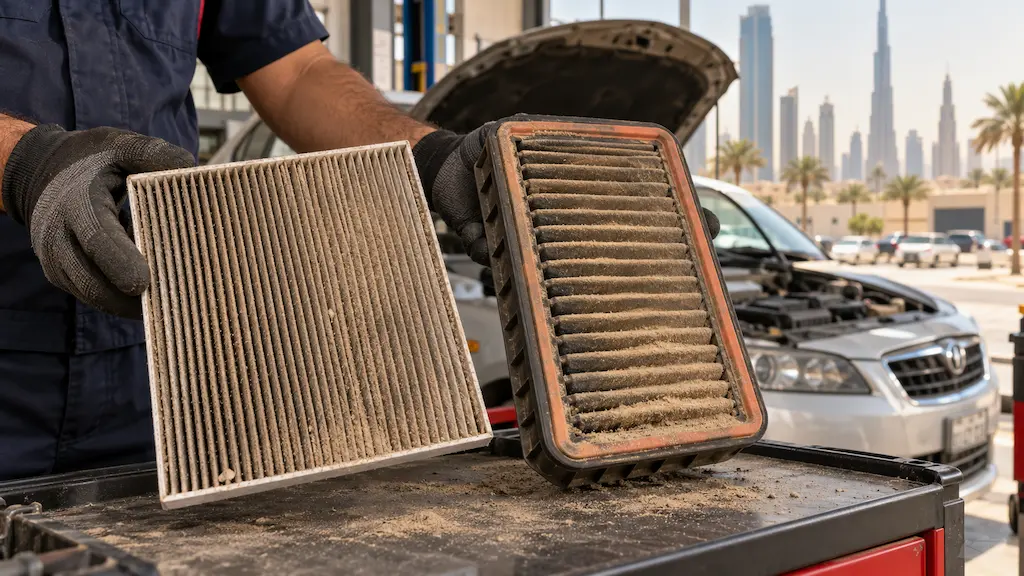
Dust and sand carried on desert winds add to the load too, settling on the condenser fins and reducing how efficiently heat can escape the system one reason Dubai workshops see condenser-related complaints more often than workshops in cooler, cleaner climates.
Why Is My Car AC Blowing Warm Air?
A handful of causes account for most AC complaints we see:
- Low or leaking refrigerant, the system loses its ability to absorb cabin heat
- A failing compressor, the component that pressurizes refrigerant can wear out or seize
- A blocked or dirty condenser dust and sand (common on UAE roads) restrict airflow across it
- A clogged cabin filter, reduces airflow even when cooling itself is fine
- Electrical or sensor faults, a faulty clutch relay or pressure sensor can stop the compressor engaging at all
Signs Your AC Compressor Is Failing
The compressor is usually the most expensive AC component to replace, so catching early warning signs matters:
- AC blows warm or only mildly cool air, even on max setting
- Grinding, rattling, or squealing noises when the AC is switched on
- The compressor clutch doesn’t engage (no audible click when AC turns on)
- A burning rubber smell from the engine bay
- Noticeably higher fuel consumption from the extra engine load
- Visible oily residue or a refrigerant leak under the car
These symptoms often build up gradually, which is why many drivers assume the AC is simply “getting weaker” with age rather than actually failing. In practice, most compressors either last the life of the car with proper maintenance or start showing clear warning signs within a specific window, typically between years six and ten for vehicles driven daily in Dubai conditions.
For a broader rundown of dashboard and performance warning signs beyond the AC, see our guide to common vehicle warning signs.
If you notice two or more of these together, it’s worth having the system inspected before a full compressor failure forces a more expensive repair.
AC Gas Refill & Repair Costs in Dubai
Costs vary by vehicle, refrigerant type, and workshop, but typical Dubai ranges look like this:
| Service | Typical Cost (AED) |
|---|---|
| AC gas refill (ragas) | 150 – 350 |
| Full AC service (refill + inspection + clean) | 300 – 600 |
| Refrigerant leak detection & repair | 250 – 1,500 |
| Condenser repair or replacement | 300 – 2,000 |
| Compressor repair or replacement | 850 – 5,000 |
A gas refill alone can look like a fix because cooling improves temporarily, but if the gas is leaking out, the same problem returns within weeks. Our technicians always run a pressure and leak check alongside a refill so you’re not paying for the same service twice.
Refrigerant Types: R134a vs R1234yf in the UAE
Most cars built before around 2017 use R134a refrigerant, while many newer models, particularly European makes use R1234yf, a gas designed to have a lower environmental impact. The two aren’t interchangeable, and using the wrong type can damage the compressor or void a manufacturer warranty.
R1234yf typically costs more to refill than R134a, which is part of why a straightforward ragas on a newer BMW or Mercedes can run higher than the same service on an older sedan. If you’re unsure which refrigerant your car uses, it’s usually listed on a compliance sticker under the bonnet, or your workshop can confirm it before starting any work. Always ask which gas type is being used, especially if you’re getting a quote over the phone rather than in person.
Pre-Summer AC Checklist
A few simple checks before peak heat season can prevent most mid-summer breakdowns:
- Test cooling performance on a warm day, not just a mild one
- Replace the cabin air filter if it’s been over a year, or sooner in dusty conditions
- Have refrigerant levels checked, a slow leak often isn’t obvious until cooling drops noticeably
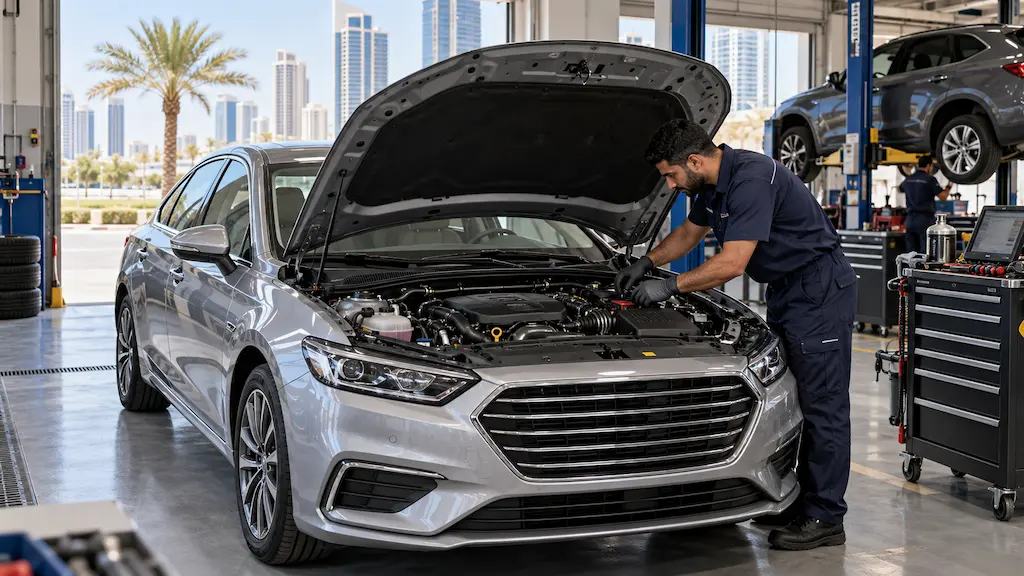
- Listen for compressor noise with the AC running and the hood open
- Check for musty odours, which usually mean the evaporator needs cleaning
Vehicles parked outdoors in Dubai, especially older cars and those used for daily highway driving like Sheikh Zayed Road or the Hatta route, tend to need this check more often than garage-kept cars.
It’s also worth checking the AC drain hose for blockages. A clogged drain can let condensation pool in the cabin footwell, which is more a comfort and mold issue than a cooling one, but it’s an easy check while everything else is already being inspected.
DIY Checks vs When to Call a Professional
Checking the cabin filter or listening for obvious noises is something most drivers can do themselves. However, refrigerant handling requires UAE-regulated equipment and the correct gas type for your vehicle, getting this wrong can damage the compressor outright. If you’re unsure what’s causing the problem, a proper diagnostic check is faster and cheaper than guessing. For wider mechanical issues beyond the AC itself, our complete guide to trusted auto repair services covers what to expect from a reliable Dubai workshop.
Frequently Asked Question
Why is my AC still not cold after a gas refill?
If cooling drops again within a few weeks, there’s likely a leak rather than simple gas depletion, the refill masked the symptom temporarily.
How often should I get my car AC serviced in Dubai?
Most UAE workshops recommend a full AC check once a year, ideally before summer, or sooner if you notice reduced cooling.
Can I keep driving with a weak AC compressor?
Yes in the short term, but a failing compressor can send metal debris through the system, turning a moderate repair into a full system replacement.
Is a cheap AC gas top-up a real fix?
Only if there’s no underlying leak. Always ask for a pressure test alongside any refill so you know what you’re paying for.
Do window tint or sunshades reduce AC strain?
Yes, cutting solar heat gain through tinted windows or a reflective sunshade lowers how hot the cabin gets while parked, so the AC doesn’t have to work as hard to bring it back down once you’re driving.
Conclusion
Dubai’s heat isn’t forgiving to a struggling AC system, and small issues rarely stay small once temperatures climb. If your car’s cooling has started to slip, book a diagnostic check with our team at Car Experts Dubai, we’ll identify the actual cause before recommending any repair, so you only pay for what your car needs.
Our Umm Ramool workshop handles everything from a same-day gas top-up to a full compressor replacement, with a clear estimate given before any work begins.