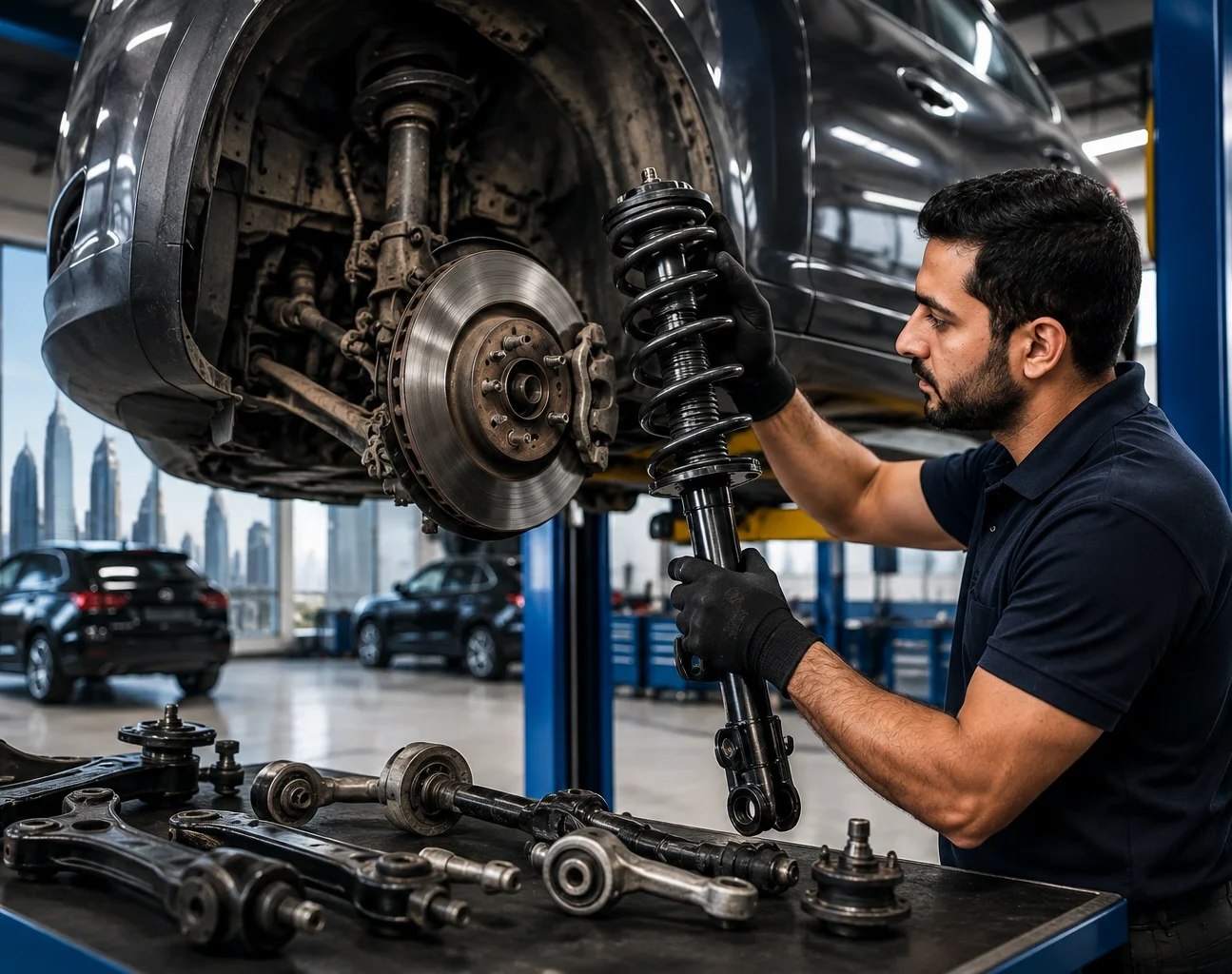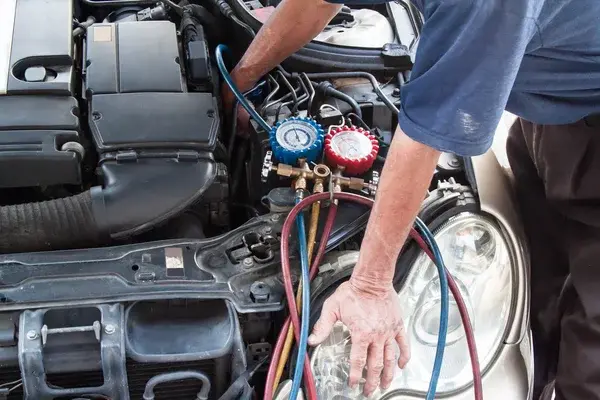
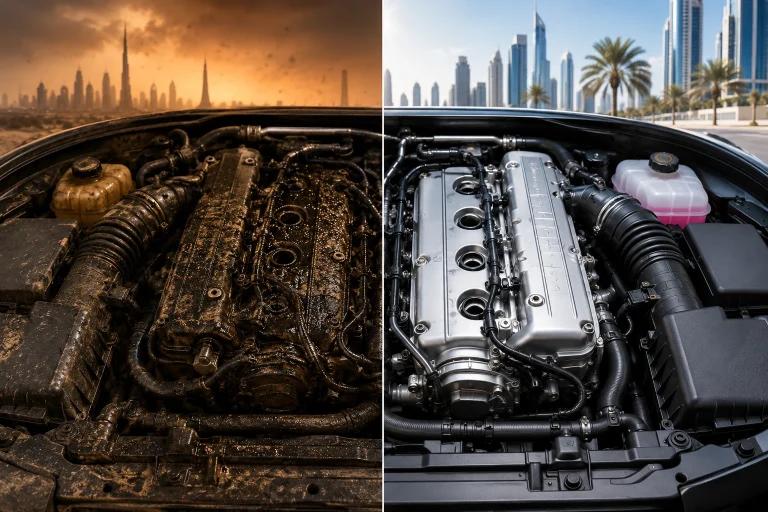
A few days ago, a customer visited our garage complaining that his car had lost its smoothness it felt sluggish, noisier than usual, and was consuming more fuel than normal. He assumed it was a major engine issue, but after a quick inspection, the real problem was simple: degraded engine oil. In Dubai’s extreme conditions, where temperatures often exceed 45°C and fine desert dust is unavoidable, engine oil breaks down much faster than most drivers expect.
At our car garage in Dubai, we regularly see the effects of delayed oil changes engines running rough, overheating in heavy traffic, and fuel efficiency gradually dropping. Many of these issues can be prevented with timely maintenance. In fact, a proper oil change in Dubai is one of the most effective ways to restore engine performance and extend its lifespan.
If your car hasn’t been performing the way it used to, understanding what happens inside your engine before and after an oil change can completely change your approach to maintenance. This guide will show you how a simple service can make your car feel smoother, quieter, and more efficient, almost like giving it a second life.
Why Oil Changes Matter More in the UAE
Engine oil does several critical jobs: it lubricates moving metal parts to prevent friction, carries heat away from the engine, cleans out microscopic debris, and creates a protective film that prevents metal-to-metal contact.
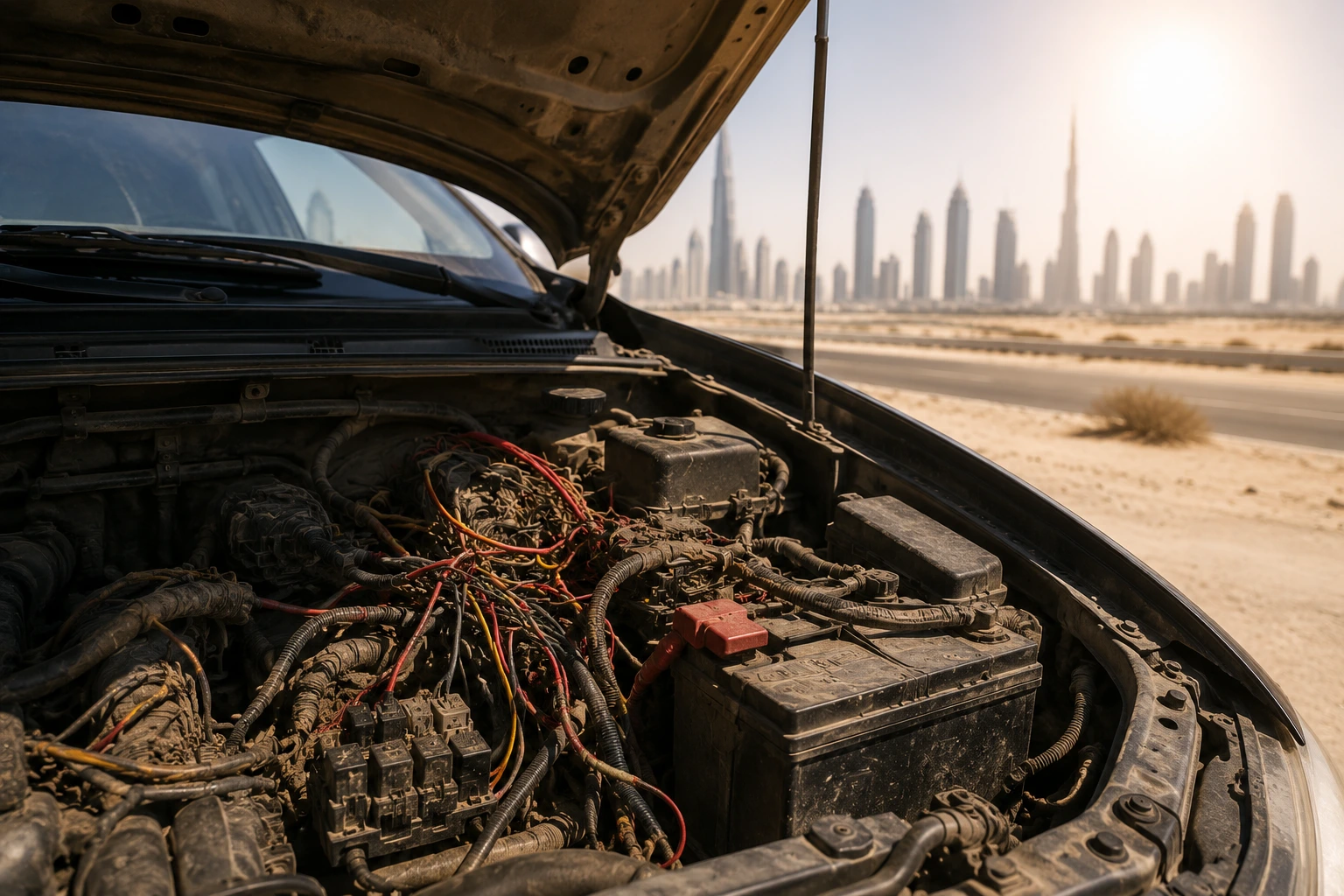
In the UAE, these jobs become significantly harder. Extreme heat accelerates oil oxidation, causing it to break down and thicken into a sludge-like consistency. Sand and fine dust particles enter the engine more easily in desert conditions, contaminating the oil faster. Stop-start city driving in Dubai and Abu Dhabi traffic also puts constant stress on the engine without allowing it to fully warm up and circulate oil evenly.
The result: oil that should last 5,000–10,000 km in a mild climate may degrade meaningfully sooner in Gulf conditions.
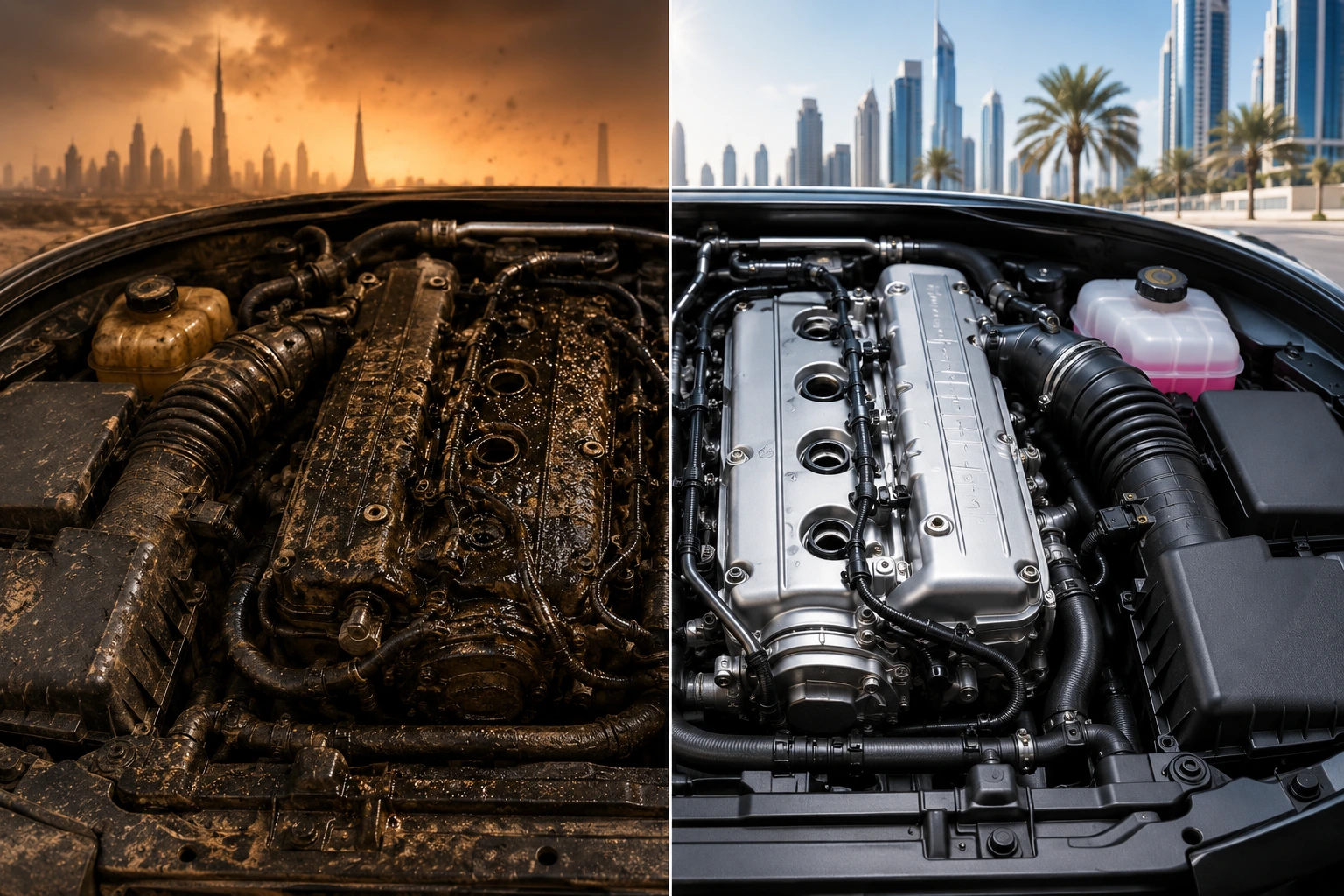
Before the Oil Change: What Your Engine Experiences
Increased Engine Noise
Old, broken-down oil loses its viscosity its ability to create a smooth, slippery film between moving parts. Metal components begin to contact each other more directly, producing a noticeable knocking, tapping, or ticking sound, particularly at startup. This is your engine quite literally grinding against itself.
Reduced Acceleration and Power
Thick, degraded oil creates drag inside the engine. The pistons, crankshaft, and other components have to work harder against the resistance of dirty oil, which translates directly into sluggish throttle response, slower acceleration, and an engine that feels heavier and less responsive than it should.
Higher Fuel Consumption
When engine components are not lubricated properly, the engine burns more fuel trying to compensate for the extra resistance. Drivers often notice a gradual increase in fuel costs before they connect it to oil condition. In UAE traffic, this effect is amplified because the engine is frequently idling or stopping.
Overheating Risk
Clean oil carries heat away from the combustion chamber. Degraded oil has significantly reduced heat-transfer capacity. In a country where ambient temperatures are already extreme, this increases the risk of engine overheating, especially during long motorway drives or in heavy stop-and-go traffic.
Dark, Gritty Oil
Fresh engine oil is an amber-golden colour with a smooth consistency. Oil that has been running too long turns dark brown to black and takes on a gritty texture from the combustion byproducts and metal particles it has accumulated. You can check this yourself by pulling the dipstick.
After the Oil Change: The Difference You Can Feel
Quieter, Smoother Engine
Fresh oil restores the protective film between metal parts almost immediately. The tapping and knocking sounds that developed with old oil typically disappear within the first few kilometres of driving. The engine settles into a noticeably quieter, smoother idle.
Restored Throttle Response
With clean oil reducing internal friction, the engine moves more freely. Most drivers notice an immediate improvement in acceleration the car feels more responsive, lighter on its feet, and more eager to perform as it should.
Lower Fuel Consumption
Reduced internal friction means the engine achieves the same performance with less fuel. Regular oil changes are one of the most direct, measurable ways to maintain factory fuel efficiency figures. Some drivers report a visible improvement in fuel economy within a full tank of driving after a fresh oil change.
Better Engine Temperature Management
Fresh oil restores heat-transfer efficiency, helping keep the engine within its optimal operating temperature range. This is particularly valuable in UAE summer months when even a well-maintained car is working hard just to manage heat.
Engine Protection for Thousands of Kilometres
Beyond the immediate feel improvement, clean oil deposits a fresh protective layer across all internal components. This directly slows wear and tear, extends engine life, and reduces the likelihood of expensive repairs down the road. Think of it as resetting the clock on your engine’s health.
How Often Should You Change Oil in the UAE?
While most manufacturers recommend oil changes every 10,000–15,000 km under normal conditions, UAE driving conditions are far from normal. As a general guideline for the Gulf:
- Conventional oil: every 5,000–7,000 km
- Synthetic oil: every 8,000–10,000 km in UAE conditions
- If you do frequent short trips or heavy city driving: err on the shorter end of the interval
Always check your vehicle’s manual, but adjust for the climate. Synthetic oil is strongly recommended for UAE driving; it handles high temperatures and longer intervals significantly better than conventional oil.
Choosing the Right Oil Grade for UAE Heat
Oil viscosity grade matters more in extreme heat. Look for grades like 5W-40 or 10W-40 for most passenger cars in the UAE these maintain their protective film at high temperatures without becoming dangerously thin. Using a grade not suited to your engine or the climate can accelerate wear even with fresh oil.
When in doubt, our team at Car Experts Auto Services will recommend the exact grade and oil type matched to your vehicle and driving conditions.
The Role of Engine Health in Overall Performance
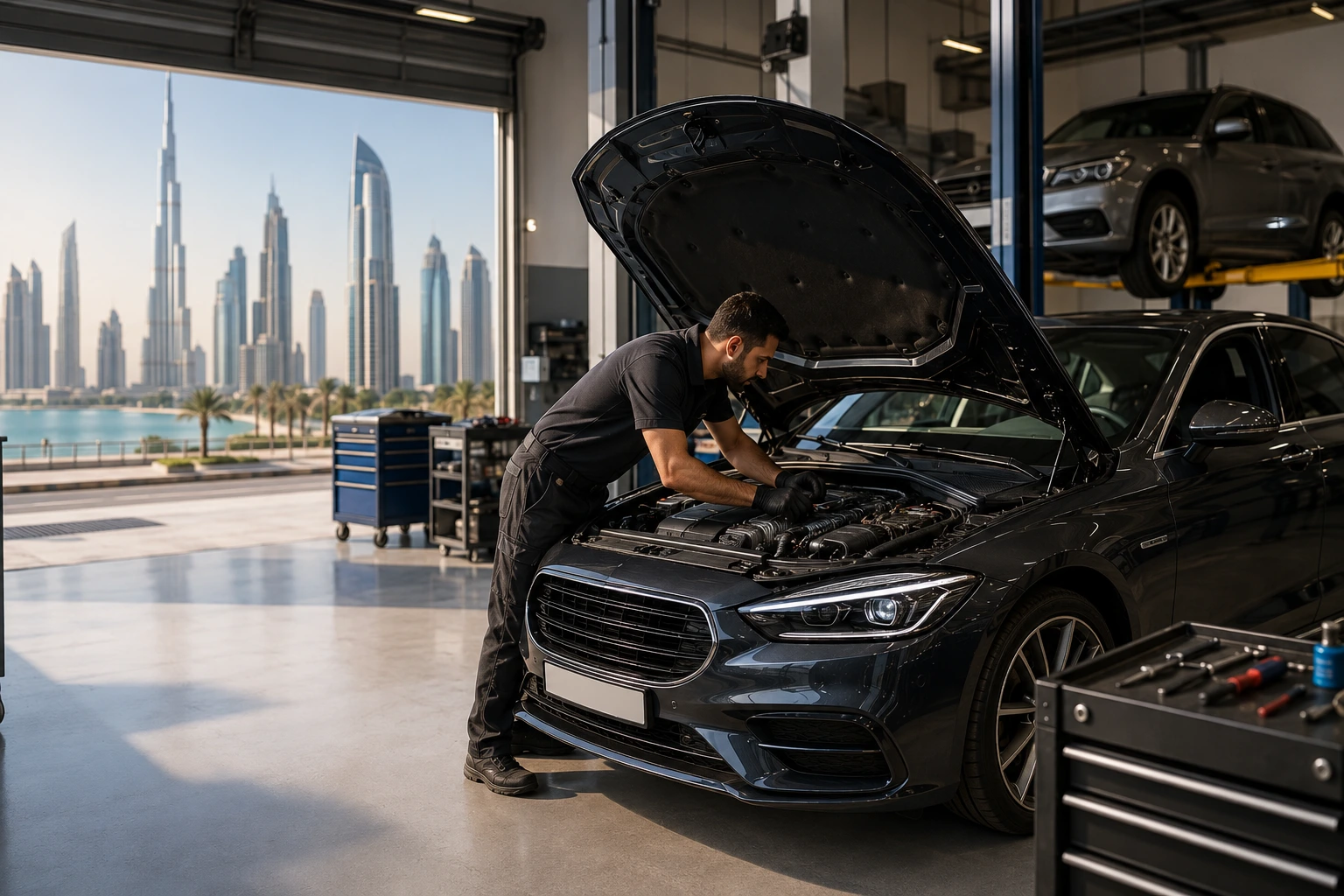
An oil change is also a checkpoint. When a qualified technician changes your oil, they inspect the oil filter, check for leaks, examine surrounding components, and can catch early signs of engine issues before they become costly repairs. If there are deeper concerns, unusual sludge buildup, metal particles in the oil, or signs of internal wear our engine repair specialists in Dubai can assess and address them early.
Frequently Asked Questions
Q1. How do I know if my car needs an oil change now?
Check the oil dipstick if the oil is dark brown or black, gritty to the touch, or the level is low, it is time for a change. Other signs include a persistent engine knocking sound, reduced fuel efficiency, or an illuminated oil warning light on your dashboard. In UAE conditions, do not wait for the warning light; go by mileage instead.
Q2. Is synthetic oil worth it for driving in Dubai?
Yes, absolutely. Synthetic oil is specifically engineered to maintain its viscosity under high temperatures, making it far better suited to the UAE climate than conventional oil. It resists breakdown longer, provides better engine protection during hot idling in traffic, and typically offers a slightly longer service interval a worthwhile investment for Gulf driving.
Q3. Can I do an oil change myself at home?
Technically yes, but it is not recommended for most drivers. An incorrect oil grade, under-tightened drain plug, or improperly fitted oil filter can cause serious engine damage. A professional oil change also includes a visual inspection of surrounding components, which can catch early issues that a DIY change would miss entirely.
Q4. What happens if I skip an oil change for too long?
Prolonged use of degraded oil leads to sludge buildup inside the engine a thick, tar-like deposit that clogs oil passages and starves components of lubrication. In severe cases this causes permanent engine damage requiring a full engine overhaul or replacement, a cost that far exceeds the price of routine oil changes.
Q5. Does the type of driving I do in the UAE affect how often I need an oil change?
Yes. Frequent short trips around the city common in Dubai and Abu Dhabi are harder on engine oil than long highway drives because the engine never fully reaches optimal operating temperature to burn off moisture and contaminants. If most of your driving is urban stop-start, change your oil at the shorter end of the recommended interval.